
Baseball is hot right now. You can feel it on the show floor, you can see it in auction results, and you can read it in the sold comps. The hobby has been through this cycle before. It flatlined in the mid-2000s, surged, corrected, then went wild during the pandemic. What is happening now feels steadier. The money flowing into baseball has a real foundation under it, and that changes how you should be buying.
Let me walk through the three places that foundation is strongest.
Vintage Is Still the Bedrock
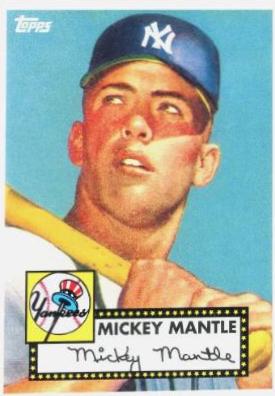
Talk about baseball's blue chips and you are talking about vintage. That has always been true and it is not changing. The headliner is the 1952 Topps Mickey Mantle #311. Raw copies trade around $46,960, and a clean one in that condition is genuinely hard to find. A PSA 10 sits near $11.3 million. Even a PSA 9 carries roughly $4 million. Those are not hype numbers. They are the result of decades of demand chasing a tiny supply.
The lesson is not that you should go buy a Mantle. The lesson is what vintage scarcity does to a price over time. High-grade cards of the players who defined the game keep climbing because the population never grows and the demand never leaves. If you hold graded vintage of Mays, Aaron, or Clemente, sit tight. That stuff only gets harder to pry loose.
The Modern Game Is About Timing
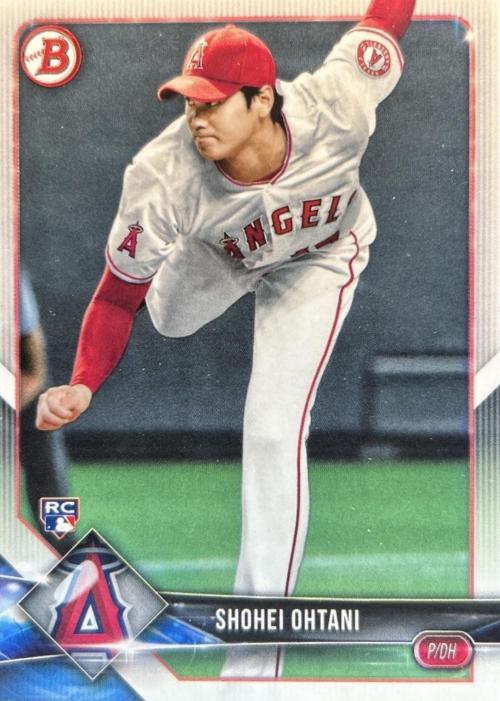
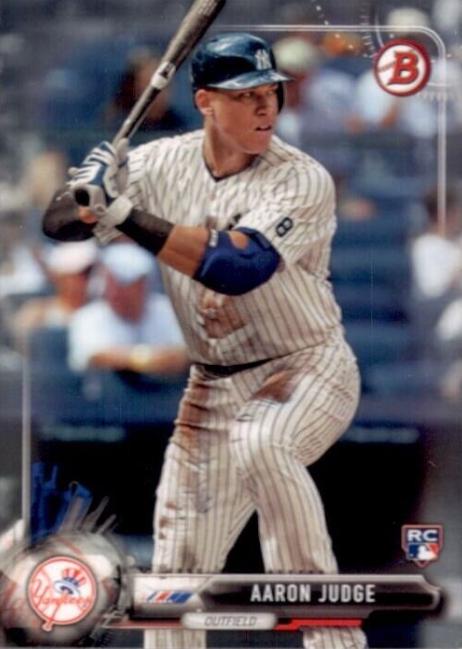
Modern cards move differently. Everyone chases the same handful of stars, which builds enormous hype and a premium to match. Look at Shohei Ohtani. His 2018 Topps Chrome #150 trades around $476 raw, and a PSA 10 runs about $1,040. Aaron Judge's 2017 Topps Update Rookie Debut #US99 sits near $35 raw, with a PSA 10 around $280. Strong cards, but you are paying for a name the whole market already knows.
The real upside in modern baseball is getting in before the crowd does. Mike Trout shows the ceiling on this. His 2011 Bowman Chrome #175 trades around $148 raw and roughly $600 in a PSA 10. Fifteen years ago that was a prospect card. The names bubbling up in Double-A right now are where that same curve starts. Track the prospects, buy before the national call-up, and let the Bowman Chrome autos do the work after the hype catches up.
Do Not Sleep on the Mid-Tier Hall of Famers
Here is where the value hides. Some of the best players of their era never had the one iconic rookie everyone fights over, so their cards never priced up to match their careers. Mike Piazza is the cleanest example. He is a Hall of Famer with a monster bat, yet his 1992 Bowman #461 trades around $20 raw and only about $259 in a PSA 10. Compare that to Ken Griffey Jr., whose 1989 Upper Deck Star Rookie #1 sits near $85 raw and pushes past $5,500 in a PSA 10. Same tier of player, very different price.
Justin Verlander is another one. Future Hall of Famer, a workhorse for two decades, and his 2006 Topps Chrome #309 still trades around $23.50 raw, $51 in a PSA 9, and $231 in a PSA 10. That is accessible money for a player with that resume. Grab a clean copy, get it graded, and you have a long-term hold with real upside if his legacy keeps compounding. Even a vintage legend like Willie Mays has affordable entry points. His 2003 Bowman Chrome #351 trades under $2 raw and around $42 in a PSA 10. The market loves a narrative, and these players have the narrative without the price.
Your Move
The plan is simple. For vintage, hold your high-grade legends and let scarcity work. For modern, be early on prospects and pay attention to who is climbing before they break out. And do not overlook the mid-tier Hall of Famers whose cards have not caught up to their careers. The sold prices back all three plays. Baseball is not slowing down, and the smart buys are sitting in plain sight.