
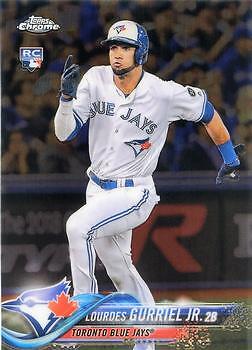
Brendan Little is a left-handed reliever the Blue Jays have carried for years. His on-field results have been uneven. His card market is something quieter: it barely exists. Search his name and you find almost nothing changing hands. No active comps. No graded population worth quoting. For a lot of collectors that reads like a problem. It is not. It is the most common outcome in the entire hobby.
Most players who reach the majors never develop a real card market. Liquidity is rare. It clusters around stars, around rookies people chase, around names with a story. A middle-relief arm rarely gets any of that. The cards exist. They just sit. When you cannot pull a single recent sale on a player, the market has already told you everything: nobody is buying, nobody is grading, and the few singles out there move for pocket change when they move at all.
Reading A Flat Market
There is a difference between a card that dropped and a card that never traded. A drop has a chart. You can see the peak, the slide, the floor. Brendan Little does not have that. He has a flatline. That distinction matters, because a flatline is not a dip you buy. It is the absence of demand, and absence does not bounce.
Here is the practical read. If you hold a fringe reliever's base rookie, treat it as a dollar-bin card and price it accordingly. Do not grade it. Grading fees alone will exceed what the slab returns, and a low pop on a no-demand player is not scarcity, it is indifference. The hobby loves to dress up inaction as patience. On a name like this, patience is just storage.
What Real Liquidity Looks Like
Set Little next to a few names that actually trade, and the gap is obvious. Take Gunnar Henderson. His 2023 Bowman Chrome base, card #10, runs about $1.79 raw, with a PSA 10 around $34.21. The Sapphire parallel of that same card sits near $5.91, and its PSA 10 lands close to $63.14. Those are not huge numbers. They are real ones. Volume is steady, comps are dense, and you can sell any of them in a day. That is liquidity.
Evan Carter is similar. His 2024 Bowman Chrome base, card #65, sits around $1.05 raw, and the PSA 10 of that card runs near $14. His Bowman's Best Best of 2024 autograph trades near $16.31 loose, with graded copies in PSA 10 around $41.49. Modest cards, but a living market. The point is not that these players are expensive. The point is that someone is always on the other side of the trade. With Brendan Little, there is no other side.
If you want the version of this story where the prospect actually hit, look at Zack Greinke. His 2002 Bowman Chrome Draft Picks rookie, card #6, still moves near $52.73 raw, and a PSA 10 of that card runs around $3,274.50. That is what a draft-pick card looks like twenty years later when the player becomes a star and the card holds a market the whole way. Most prospects never get within a mile of that. The Greinke is the exception that proves how rare the outcome is.
The Lesson In A Name That Does Not Move
Brendan Little's market is not a tragedy and it is not a buying opportunity. It is a teaching case. When a player's cards stop generating sales, the market has closed the file. The team's plans, the next outing, the hope of a turnaround, none of that shows up in a comp. Only demand does. And demand here is gone.
So be honest about sunk cost. If you are holding his cards, you keep them for nostalgia or you clear them for whatever a buyer will pay, and you stop pretending a comeback is priced in. Put your hobby budget where there is a market to trade against. A cheap Henderson or Carter you can actually sell beats a no-demand reliever you cannot give away. The cards that matter are the ones someone else still wants. Brendan Little's cards, for now, are not on that list.