
Every season hands the hobby a new wave of can't-miss rookies. Most miss. For every Mike Trout there are a hundred names that never clear Triple-A, and the cards follow the player straight down. The skill here isn't betting on a rookie. It's betting on the right player, in the right card, at a price that still leaves room to climb.
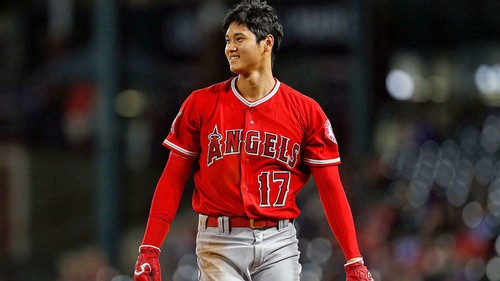
Numbers tell the story better than any pep talk. Consider a finished superstar arc. A 2009 Bowman Chrome Draft Mike Trout Autograph Refractor sells raw for $150. A PSA 10 of that same card sells for $30,000. Ohtani's 2018 Bowman Chrome base rookie runs $1838.96 loose, with a PSA 10 at $4550. Those are the ceilings everyone chases. Problem is, you can't buy those names cheap anymore. The value is baked in.
Why Chasing Hype Fails
Everyone wants the next Ohtani. So everyone piles into the same names the second a prospect heats up in spring training. By the time a kid is getting national broadcasts, the cards already reflect it, and you're paying full freight for a known quantity instead of finding a sleeper.
A quieter trap hides underneath that one. A finished star's base rookie often stays cheap because the print run is enormous. Take Elly De La Cruz, already an established big-leaguer. His 2023 Bowman Chrome Prospects base sells for $2 loose and $29.99 in a PSA 10. The card collected. It never popped. Scarcity moves the needle, not the name alone.
What a Future Pop Actually Needs
Three things have to line up. Start with the player. Skip the hot-month stat lines and read the underlying tools instead: plate discipline, command on the mound, a frame that projects. You want longevity. A flash burns out.
Scarcity comes next. A base Chrome rookie off a massive run is fine for the binder and weak for a flip, because the money lives in numbered parallels and autos where the print run caps supply. The gap shows up on the same player. A 2023 Bowman Chrome Jordan Walker base sells for $1 loose. The Aqua RayWave parallel of that exact card sells for $19.83 loose and $98.50 in a PSA 10. Same player, same set, a sliver of the print run, many times the price.
Grading upside closes it out. A clean raw card bought cheap can multiply the moment it grades. Walker's base is $1 raw and $30.53 in a PSA 10. A 2024 Bowman Chrome Wyatt Langford runs $1.28 loose and $27.50 graded. Most of what a grader checks, you can eyeball: centering, sharp corners, a clean surface, a crisp signature. Find a sub-$2 card that looks like a gem and the submission math tilts your way.
Where the Value Hides
The crowd fixates on the prospects about to get called up. Go a tier down instead. Players a year or two out, still in the minors, putting up steady numbers without the national spotlight. Their first Bowman Chrome autos stay affordable, and a low entry price is exactly what you want. Cheap leaves room to run.
Watch the pattern repeat. Julio Rodriguez's 2019 Bowman Chrome Prospects base sells for $7.13 loose. The Mojo Purple Refractor of that same card? $27.49 loose, and $192 in a PSA 10. Base was the collector's piece. The numbered parallel was the play. Today's names trace the same shape. A 2024 Bowman Chrome Prospects Jackson Holliday base sits at $1.19 loose, with the PSA 10 at $18.74. Cheap base cards on real prospects are the raw material. Parallels and autos are where you build a position.
Do Not Sleep on the PSA 9
A perfect 10 isn't always the smart buy. When the population report for the 10 is thin and the price gap is wide, a clean PSA 9 of a key rookie parallel can be the better value. The difference between a 9 and a 10 is often microscopic. The price difference rarely is. For a collection you plan to hold, the 9 frequently beats paying multiples for the grade above it.
The Move
Stop ripping every box hoping for a miracle. Pick two or three prospects still a year or two out, with real tools, who aren't drawing mainstream hype yet. Target their numbered Bowman Chrome first autos and low-numbered parallels. Buy raw when the card looks clean. Send it in. That is how a few dollars becomes a real position. The names turn over every season. The playbook doesn't.