
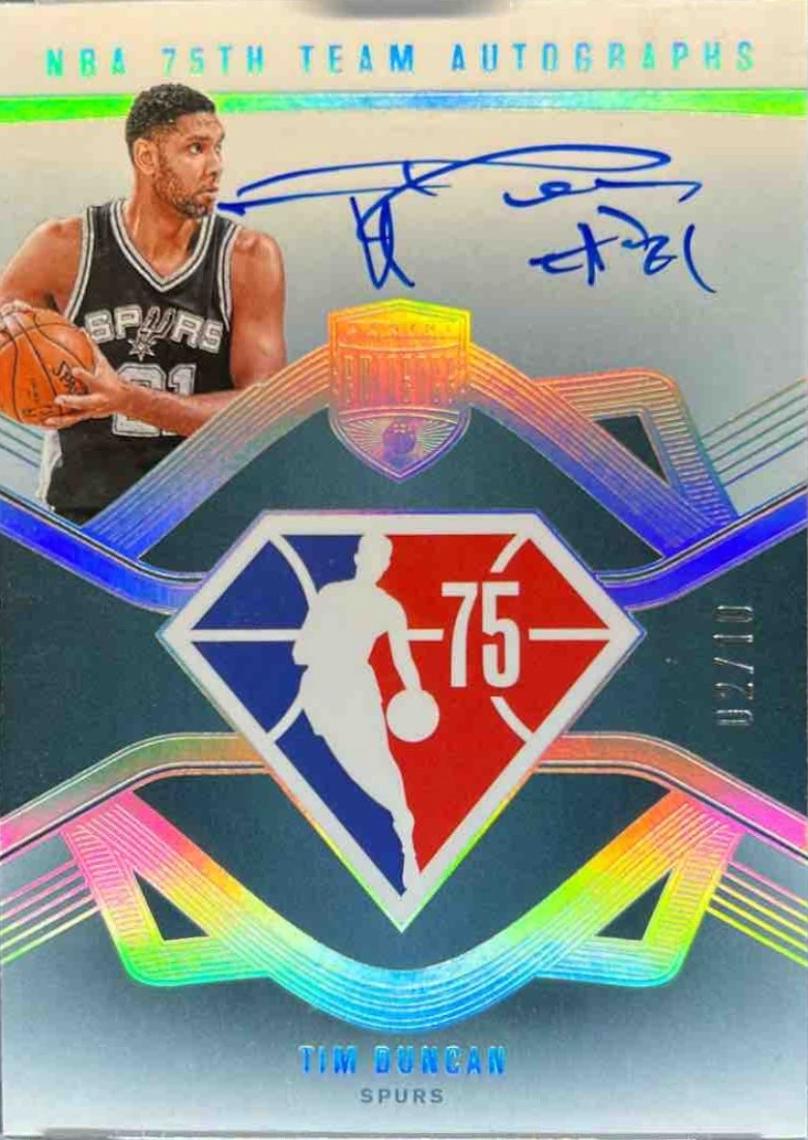
The NBA card license now sits with Topps and Fanatics. That ends a long stretch where Panini owned the modern basketball market, and it has collectors asking the obvious question: does the new flagship deserve your money, or is this just hype wearing a different logo?
The honest answer is that a license change does not rewrite pricing. Value tracks three things, and it always has. The player, the grade, and the print run. A new brand on the box does not change that math. So instead of guessing at sealed boxes nobody has opened yet, look at what cards from these exact players already sell for. The comps tell the story cold.
The Star Rookies Set the Floor
Start with Shai Gilgeous-Alexander, the engine of the best team in the league. His 2018 Panini Prizm base rookie trades around $28 raw, and a PSA 10 of that same card clears $236. Move to the Silver Prizm parallel and the picture changes completely: $355 raw, and gem copies sit north of $2,900. Same player, same year, same brand. The only difference is scarcity and the grade. That gap is the whole lesson in two numbers.
Topps is not starting from zero with these guys, either. The 2025 Topps Chrome base SGA already moves at roughly $14 raw, with the PSA 10 landing near $64 and the Refractor PSA 10 pushing $125. Those are real prices on a recent Topps release, not projections. Chrome has a long track record of holding, and the early read on the current product backs that up.
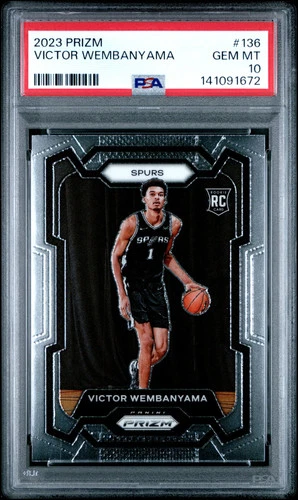
Then there is Victor Wembanyama, who may be the single most chased modern name in the hobby. His 2023 Topps Chrome rookie clears $57 raw and $587 in a PSA 10. The 2023 Prizm base sits around $96 raw, and a graded gem clears $496. Volume on these is enormous, which means the market is liquid and the prices are tested. When a card has thousands of recent sales, you can trust the number.
Parallels and Grades Do the Heavy Lifting
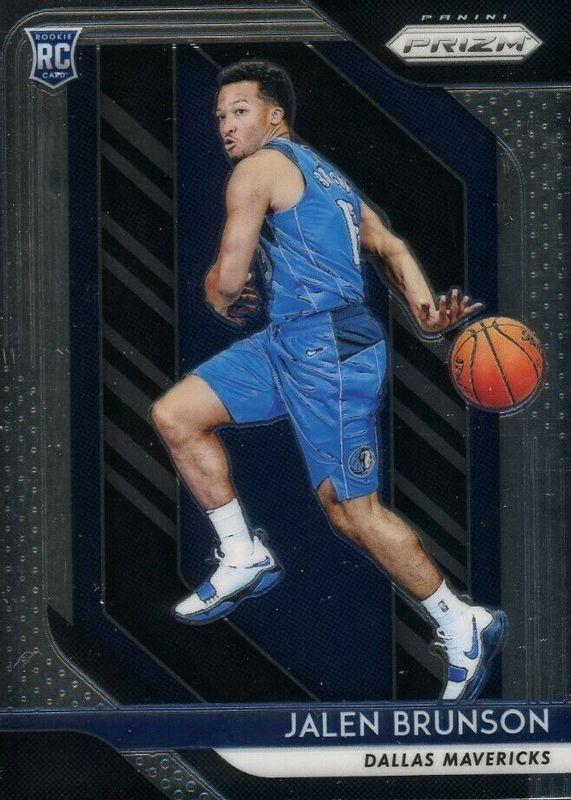
Here is where most new collectors leave money on the table. A base card is a base card. The premium lives in the colored parallels and the high grades. Jalen Brunson is a clean example. His 2018 Prizm base rookie runs about $17 raw, with a PSA 10 at $349. Step up to the Silver Prizm and you are at $120 raw and a $900 PSA 10. Luka Doncic tells the same story even louder. His 2018 Prizm Silver sits over $417 raw, the PSA 10 clearing $1,578.
Nikola Jokic is the ceiling case. His 2015 Prizm base rookie already commands $212 raw and $984 graded. The Silver Prizm version of that card? A PSA 10 sells for $5,450. Three MVPs and a title will do that. The pattern repeats across every star: base cards give you exposure, parallels and grades give you the upside.
Where the Value Is Not
Plenty of product will not hold. If a card sits on every retail shelf and a player has not earned the resume, the market sorts it out fast. Reed Sheppard is a useful test case. His 2024 Prizm Silver rookie trades around $7 raw, yet a PSA 10 of that same card has cleared $205. The raw card is cheap because supply is heavy and the career is unwritten. The graded jump exists because gem-mint copies are scarce. Buy the player and the grade, not the shelf space.
Veterans and legends behave differently again. A 2012 Prizm Kobe Bryant runs about $104 raw, its PSA 10 near $684. A 2018 Prizm Trae Young Silver sits around $20 raw and $105 graded. Established names hold a floor that unproven rookies simply do not have yet. That floor is what you are paying for.
How to Actually Play It
Skip the urge to buy everything with a new logo on it. The smarter move is narrower and cheaper. Pick the players who already have liquid, tested comps. Lean toward graded copies or the parallels, since that is where the price separation lives. And remember that a base rookie of a proven star, bought at $20 or $30, is a real position. It is not a moonshot, but it keeps you in the right players while the new Topps era fills out its checklist.
The license is new. The fundamentals are not. Chase the names the comps already reward, respect the gap between a base card and a graded parallel, and let the hype boxes prove themselves before you bet on them.