
Five Rookie Cards With Staying Power
Plenty of rookie cards spike for a month and fade. The five below have done the opposite. Each has traded heavily for years, through good seasons and quiet ones, and each still commands real money today. That track record is what every entry here has in common. These are not bets on what a player might become; the careers are already written. Every price quoted is current and pulled from real sales, raw through PSA 10, and across all five the same lesson keeps surfacing: on a proven rookie, the gem-grade premium is where the value concentrates.
LeBron James 2003 Topps Chrome #111
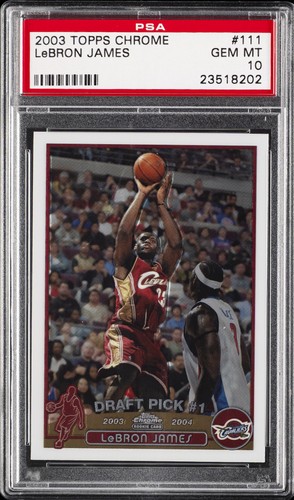
The 2003 Topps Chrome LeBron James is the card every other modern basketball rookie gets measured against. Two decades in, with four championships and the all-time scoring record behind it, the card has only hardened into a blue chip. A raw copy trades around $1,400 today. A PSA 9 runs near $2,900, and a flawless PSA 10 clears $12,000. Those are not speculative numbers chasing a hot streak. They are where the market has settled after twenty years of buying and selling, which is what a proven floor looks like. The roughly nine-times jump from raw to gem is simply the cost of finding one that survived two decades without a flaw.
Connor McDavid 2015 Upper Deck Young Guns #201
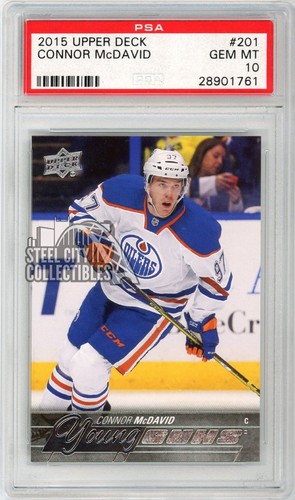
Hockey's equivalent is Connor McDavid's 2015 Upper Deck Young Guns. The number one pick that year and a repeat league MVP since, McDavid anchors the most important modern hockey rookie on the market. His Young Guns trades around $803 raw and roughly $1,030 in a PSA 9, with PSA 10 copies near $2,800. Young Guns are famously hard to grade clean thanks to tight centering and soft edges, so the climb to a gem is steep and well earned. What makes this a market-tested hold rather than a flier is consistency. It has traded steadily for years, through MVP seasons and quiet ones, without the price unraveling.
Ken Griffey Jr. 1989 Upper Deck #1
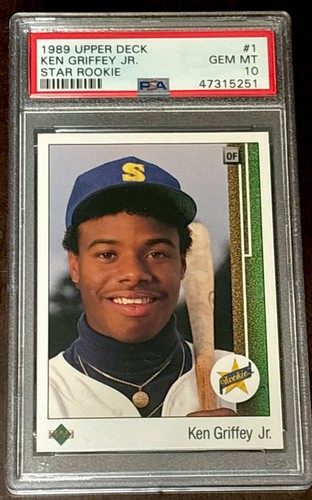
No card here shows the grading premium more dramatically than Ken Griffey Jr.'s 1989 Upper Deck. Card number one of the set that helped launch the modern hobby, it is a genuine touchstone, and copies are everywhere. A raw Griffey runs about $85, which means almost anyone can own one. The math above that is what separates the casual copy from the trophy. A PSA 9 jumps to around $420, and a PSA 10 has reached roughly $5,500. That is more than sixty times the raw price, on a card printed by the millions, because almost none survived thirty-five years clean enough to earn the top grade. Print run sets the floor here; condition sets the ceiling.
Patrick Mahomes 2017 Panini Prizm Silver #269
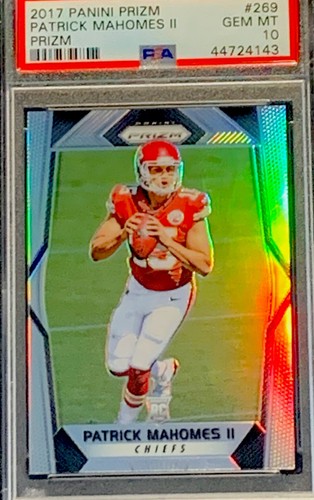
Patrick Mahomes turned his 2017 Prizm rookie into the football card of his generation, and the Silver Prizm is the one collectors chase. Several Super Bowl runs and multiple MVPs later, the demand has not cooled. The Silver trades around $700 raw, climbs to about $1,260 graded PSA 9, and reaches roughly $6,375 in a PSA 10. Quarterback cards already carry a premium because the position drives the sport, and Mahomes sits at the very top of that market. The wide spread between a raw Silver and a gem reflects how few of these fragile chrome parallels come back from grading without a flaw worth catching.
Mike Trout 2011 Topps Update #US175
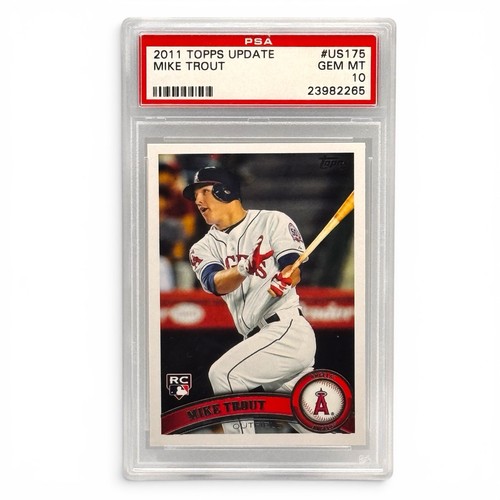
Mike Trout's 2011 Topps Update closes the list as the modern baseball benchmark. For more than a decade it was the default answer to which current baseball rookie to own, backed by a player with multiple MVPs on the shelf. The card sits near $340 raw and about $1,145 in a PSA 10, with PSA 9 copies around $416 in between. Compared with the others here the gem premium is milder, a little over three times raw, because the 2011 print run was large and high grades are more attainable. That makes it the most accessible true blue chip on the list, a card with a long record that still does not require five figures to own in top condition.
What these five share is time. Each has been bought and sold through hype cycles, slumps, and dips, and each came out the other side with its floor intact. That is the difference between a rookie card with staying power and one riding a hot month. The prices above are not forecasts; they are where the market has landed after years of testing. The consistent thread is the gem premium. On cards this established, the money is in condition, and the PSA 10 is where it collects.
Track Card Prices in Real Time
Join thousands of collectors using HobbyCardIndex to monitor prices, find grading opportunities, and build smarter portfolios.
Start Free — No Credit Card