
5 Underrated Baseball Gems Worth Stashing Right Now
Most 'cards to buy' lists chase whatever ran up last week, and I've never had much luck buying a card after it already moved. So this isn't that. These are five older baseball cards where the player isn't really the point. The point is the gap between what a raw copy costs and what a graded one does, because that gap is where the thinking happens. When a raw card is twenty bucks and a gem version is six grand, condition is the only thing doing the talking. A couple of these are cards everybody already knows, so I'm not pretending they're secret. What's underrated is the version most people skip, the raw copy or the PSA 9 instead of the 10. That's usually where the sane money sits.
1982 Topps Traded Cal Ripken Jr. #98T
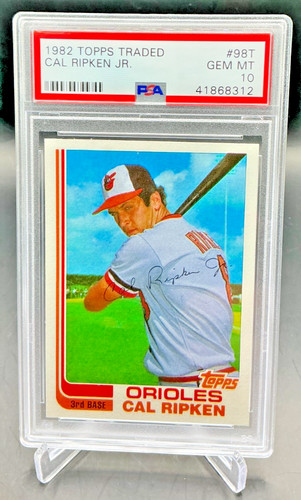
Everybody reaches for the '82 Fleer or Donruss Ripken first, and those are fine cards. But the Topps Traded one is where I keep landing. It was a mid-year update set, so it always got a little less attention than the base issues, and that's the opening. A raw copy runs around $180 now, which isn't nothing, but look at what happens up the ladder. A PSA 9 sits near $580, and a PSA 10 is up around eight grand. Same card, three different worlds. I think the 9 is the quiet play. You get a clean, slabbed Iron Man rookie for well under a grand while the 10 lives in a different price tier, and it trades often enough that you're not guessing at the number.
1983 Topps Tony Gwynn #482
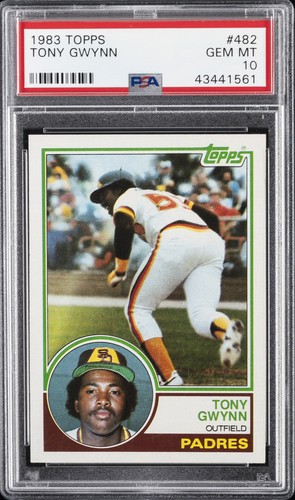
Gwynn could flat-out hit. Eight batting titles, the prettiest right-handed swing of his era. His '83 Topps rookie is a gorgeous card and a real pain to find clean, because that whole era runs into centering and soft corners. So the grades spread way out. Raw, you're under twenty bucks. A 9 jumps to around $285. A 10 is north of six thousand. That's the part people miss: the card is cheap, the grade is everything. I wouldn't chase the 10 unless you've got the budget for it. A raw copy bought with your own eyes, or a 9 if you want it settled, is the move I'd make.
1989 Upper Deck Ken Griffey Jr. #1
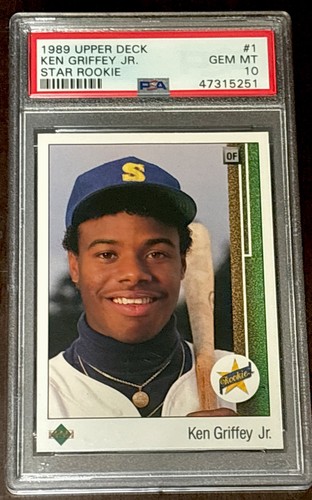
The '89 Upper Deck Griffey is on every list like this, and normally I'd skip the obvious one. I'm leaving it in because the numbers make the case. It was card number one in Upper Deck's first set, the company basically introduced itself with The Kid, and the white borders plus that glossy surface make a true gem brutal to pull. Raw sits around $85. A PSA 9 is about $420. The 10 runs up near $5,500. There's a ton of volume on this card, so none of those prices are thin or pulled off a single lucky sale. If you've ever wanted one famous rookie that still feels reachable raw, this is the one I'd start with, and you can always grade it yourself later if it's clean.
1960 Topps Brooks Robinson #28
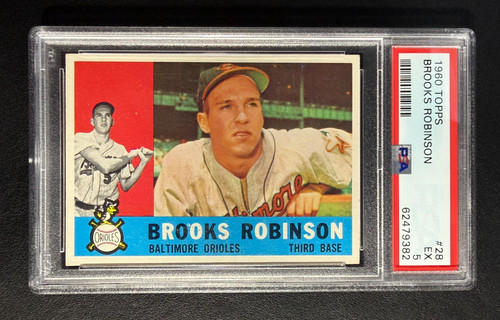
Here's the one that surprised me when I pulled the numbers. Everybody chases Mantle and Mays from this era, fair enough, but there are real Hall of Famers sitting right there for cheap. Brooks Robinson is the best defensive third baseman who ever lived, and his 1960 Topps card is a classic two-photo design. Raw, it's under twenty bucks. Now here's the surprise. A PSA 9 is around $3,200, and the 10 is only a bit more, about $3,750. That's unusual. On most cards the 10 is a huge step up, but here the 9 gets you almost all the way for hundreds less. So if I'm buying this one graded, I'm taking the 9 all day and putting the difference into another card.
2018 Topps Chrome Update Juan Soto #HMT55
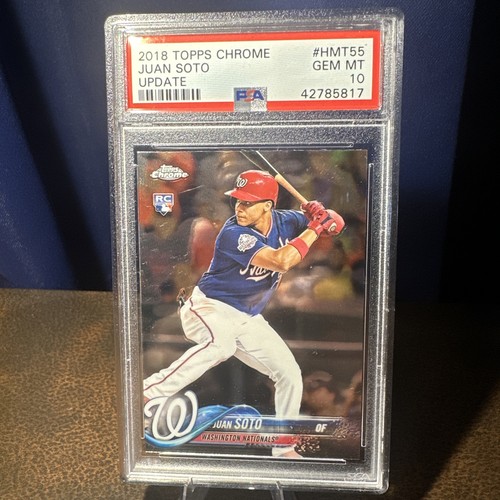
I'll put one modern card in, but it makes the opposite point, which is why I like it here. Soto's a special bat and his Topps Chrome Update rookie is the one to own from that year. But watch what the grades do. Raw is about $33. A 9 is basically the same, around $33 or $34. The 10 is roughly $70. That's it. Double for the top grade, not forty times. Modern cards survive in high grade way more often than vintage, so the gem premium stays small, and paying way up for the 10 doesn't make much sense to me. On a card like this I'd buy raw or a 9 and not lose sleep over the slab.
So that's the thread running through all five. On the old stuff, condition is rare and the gem grades go nuts, so the raw copy or the PSA 9 is usually where the value hides. On the modern stuff, gems are common, so paying up for the 10 is mostly ego. None of this is about timing a pump or guessing a prospect's ceiling. It's about reading the spread between grades, which is sitting right there in the numbers, and buying the version that makes sense for what you want to spend. That's the boring part, and the boring part is usually what holds up.
Track Card Prices in Real Time
Join thousands of collectors using HobbyCardIndex to monitor prices, find grading opportunities, and build smarter portfolios.
Start Free — No Credit Card