
Scroll through the hobby on any given night and you will see monster pulls and five-figure slabs, and it is easy to assume you need a second mortgage to play. You do not. Chasing the loudest, hottest cards is actually the fastest way to overspend. A real collection, one that means something, gets built on value. Here is how to do it without blowing your budget before the first top loader arrives.
Skip the Flagship Rookie
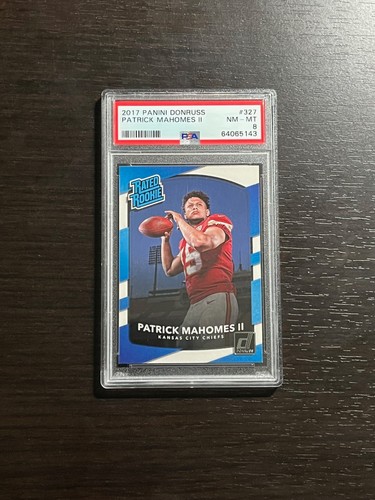
Everyone chases the marquee rookie. A 2017 Panini Prizm Patrick Mahomes Silver carries a loose price around $702 and runs about $6,375 in a PSA 10. That is a card priced like a used sedan, and you are buying at or near the top. The smarter play is the same player, a different card. Move to second-year cards, veteran inserts, and base parallels from quieter sets.
Look at LeBron James. His 2004 Topps Chrome base sits near $65 loose and around $769 in a PSA 10. The Refractor version of that exact card runs roughly $795 loose and $4,000 graded. Same player, same year, same set design, a fraction of the cost for the base. A 1998 Upper Deck Michael Jordan base is even friendlier at under $3 loose, and even a PSA 10 sits around $215. You get an all-time legend without paying the rookie tax. Collect the player and the history, not the letters R and C.
Patience Pays
The hobby runs in cycles of hype and correction. The 2020 boom sent prices soaring across the board, and 2022 brought a hard pullback. That cycle is your friend. Do not buy the white-hot player of the month. When a rookie throws a no-hitter or drops 40, the flippers pile in, push the price, and dump at the first slump.
Wait instead. Watch the market. Giannis Antetokounmpo is the lesson in one card. His 2013 Panini Prizm base now carries a loose price near $204 and around $725 in a PSA 10. Early in his career, that card was cheap. Collectors with patience caught it low. Buy low, not high. It sounds obvious, yet most people forget it in the heat of a hot streak.
Buy Raw, Grade Rarely
Graded cards look great, and a clean PSA 10 or BGS 9.5 carries real weight on a key chase card. But grading costs money and it is a gamble. On a first collection you cannot afford to slab everything and pray for a perfect score. Most of your cards will live happily in a penny sleeve and a top loader.
Consider the spread. A 1975 Topps George Brett base sits around $55 loose, while a PSA 10 of that same card has reached nearly $75,000. The grade is the entire difference, and you are not going to roll PSA 10s at home with a loupe. So buy raw, inspect the corners, edges, surface, and centering yourself, and pay the raw price. If a card ever earns a grade, great. If it does not, you still own a beautiful card for pennies on the graded dollar. Reserve grading for the genuinely special pieces, after the foundation is built.
Vintage Is the Hidden Value
Vintage does not mean a T206 Wagner or a 1952 Mantle. Those are out of reach for almost everyone. The real opportunity sits in the 1960s, 70s, and 80s, where certified Hall of Famers trade for the price of lunch. A 1970 Topps Brooks Robinson base can be had for under $4 loose. A 1970 Topps Al Kaline runs around $16. A 1993 Topps Barry Bonds base sits near $2.
A 1984 Topps Don Mattingly base is another sleeper at roughly $11 loose, with a PSA 10 reaching close to $1,976 if you ever chose to grade a clean one. These cards carry lower populations than modern product, real history, and designs that still look fantastic decades later. When you pull up a player, do not stop at the rookie. Scan the whole career. The late-career base cards are where the bargains hide.
Collectors Collect, Flippers Flip
This is the most important point. If your goal is to flip for profit, you are a speculator, and that is fine. Just do not confuse it with building a collection. A collection is about the players, the art, and the history. It is holding a card because you love it, not because you expect it to double by next month.
When you collect what you love, a market dip does not rattle you. You are not refreshing prices every five minutes over a 10 percent move. That mindset kills impulse buys and saves you from the panic of a correction. Figure out what genuinely excites you, a favorite team, a specific era, the Hall of Famers, and lean all the way in. You will end up with a collection that is uniquely yours.
Do Your Homework
So how do you actually pull this off? Research first, buy second. Find the affordable cards of your favorite players, study a full career across sets, and build a target list before you spend a dollar. Check real sold comps for both raw and graded copies so you know what a fair price looks like. Do not lean on a single live eBay listing as gospel; look at where cards have actually changed hands.
Building a first collection should be fun, not stressful. It is the hunt, the discovery, and the connection to the game and its legends. Forget the noise, ignore the high rollers, and chase the cards that bring you joy. You will end up with a genuinely good collection, and your wallet will thank you.