
Stand in front of a display case long enough and you will see a raw slab go for more than a car payment. Then the guy next to you pulls a flashy parallel out of a fresh pack and asks if he just got rich. The answer is almost always the same. It depends.
Card value is not luck. After two decades in this hobby, the math is clear. Four things decide what a card is worth: the player, the rarity, the condition, and the set it came from. Hit high marks on all four and you own something real. Hit one or two and you bought a lottery ticket.
Start With the Player
The name on the card is the engine. Everything else is gearing.
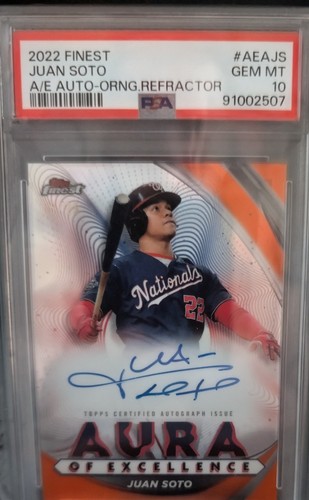
Juan Soto is a proven, elite hitter, and his cards reflect it. The 2018 Topps Chrome Update base, card HMT55, sits at about $33 raw and $70 in a PSA 10 on real sold comps. That is the floor for a star rookie-year card. Now look at the Refractor version of the same player from the same set: the HMT98 Refractor clears $487 in a PSA 10. Same player, same year, wildly different number. The difference is rarity, and we will get to that.
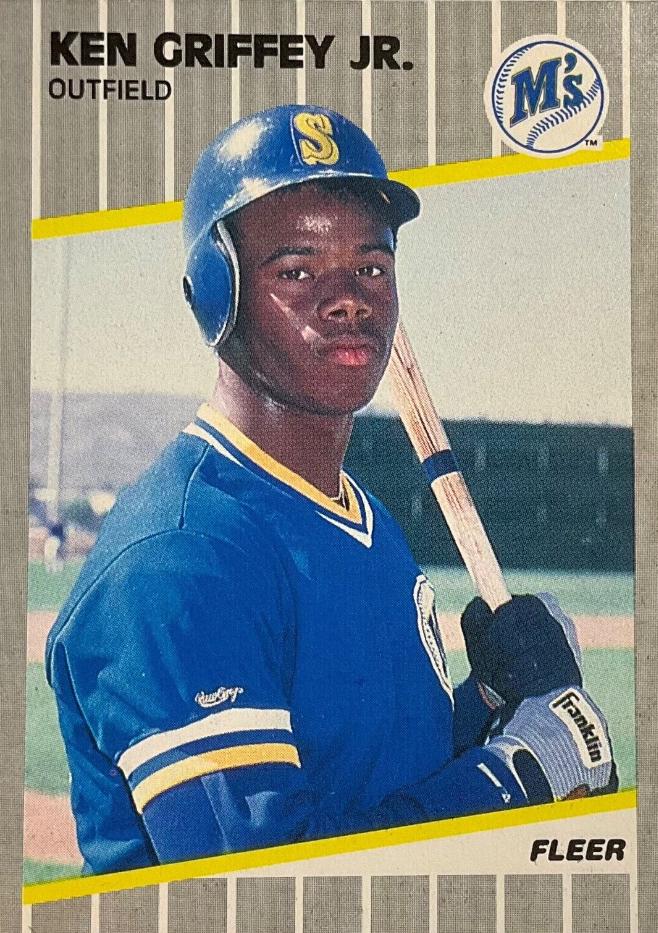
Then there is the blue-chip end of the spectrum. Ken Griffey Jr.'s 1989 Upper Deck Star Rookie, card number 1, is the most iconic modern rookie card ever printed. Raw copies trade around $92. A PSA 9 runs about $397. A PSA 10 of that card sells for over $5,400. That is not hype. That is thirty-five years of demand that never blinked.
Hype Spikes, Then Reality Lands
This is where new collectors get burned. A prospect hits a few bombs in the minors, the internet calls him generational, and prices balloon overnight. Some of those bets pay off. Most cool down hard once the player faces real pitching or the next shiny rookie arrives.
Elly De La Cruz is a genuinely exciting talent, and his cards are fun. But the 2023 Bowman Chrome Prospects Sapphire base, card BCP-65, trades around $13 raw and under $50 in a PSA 10. That is a reasonable price for a young player with upside, not a fortune. Compare that to an established name and the gap in stability is obvious.
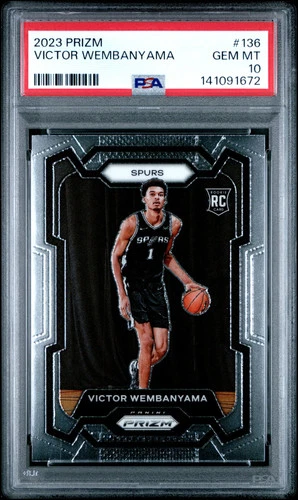
Victor Wembanyama is the rare prospect who backed up the noise. His 2023 Panini Prizm base, card 136, holds around $93 raw and over $513 in a PSA 10. He earned that price by playing like it. The lesson is not to avoid young players. The lesson is to know the difference between a price built on production and a price built on a hot week.
Rarity and Condition Do the Heavy Lifting
Once you have a great player, ask how rare the specific card is. A base card of a common player is, by definition, everywhere. A serial-numbered parallel, a Refractor, a Prizm, or a short print plays in a separate tier. The Caitlin Clark example makes it plain. Her 2024 Panini Prizm WNBA base, card 22, sits around $20 raw and $290 in a PSA 10. The Silver parallel of that exact card runs $283 raw and over $3,700 in a PSA 10. Same player. Same set. One is scarce, and the market pays for scarcity.
Condition is the other lever, and it is brutal. A raw card is always a gamble on centering, corners, and edges. Grading by PSA, BGS, or SGC turns that gamble into a documented grade, and the jump between grades can be enormous. Bo Jackson's 1986 Topps Traded rookie, card 50T, is the clearest proof on the board. Raw, it trades for about $9. A PSA 9 jumps to roughly $124. A PSA 10 of the same card sells for over $1,600. One point of grade is the entire difference between a few bucks and four figures.
How to Use This
Stop chasing the loudest card on the page. Do the work instead. Check the recent sold comps for the exact card, the exact parallel, and the exact grade before you buy. A base is not a parallel, and a 9 is not a 10. Confusing them is how people overpay.
Hunt for value where the crowd is not looking. A PSA 9 of an established player often costs a fraction of the PSA 10 and carries far less downside than a raw copy that might come back a 7. If you collect for love, buy whatever makes you happy and ignore the rest. If you buy to hold value, buy the grade, buy the comp, and let the four factors decide. Player, rarity, condition, set. That is the whole list, and it has not changed in twenty years.