
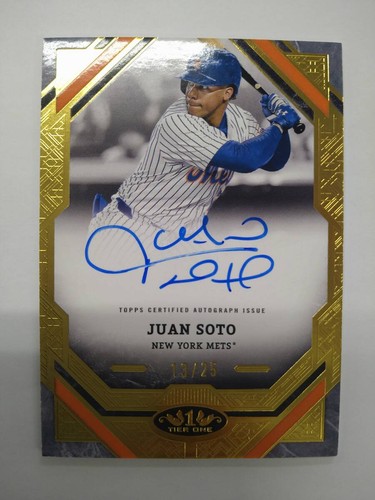
You ripped a blaster at Target, or you found your old shoebox in the attic, and now you are staring at four-figure prices online and wondering how a piece of cardboard gets there. It is not a magic formula. It comes down to four forces, and they have driven this hobby for decades.
Understand the fundamentals before you chase a shiny parallel off your feed. That is how beginners get burned.
The Player Comes First
Value starts with the name on the card. You can own the rarest, cleanest slab in the world, but if it is a guy who peaked in Triple-A and never reached the majors, it is worth almost nothing. Talent, production, and career trajectory set the ceiling.
Compare a star to a prospect. A base 2023 Topps Chrome Victor Wembanyama sells for about $57 raw, and a PSA 10 of that same card runs around $587. A top prospect with no MLB track record sits far lower. A base 2023 Bowman Chrome Sebastian Walcott goes for roughly $7 raw, with a PSA 10 near $52. That gap is the market pricing certainty against potential. Wembanyama has already proven it. Walcott is a bet.
Scarcity and Condition
Once you have a good player, two things separate a cheap copy from an expensive one: how rare the card is, and what shape it is in.
Scarcity usually shows up as a parallel or a serial number. Take Wembanyama again. The base 2023 Topps Chrome is around $587 in a PSA 10. The Refractor version of that same card jumps to roughly $2,237 in a PSA 10. Same player, same set, same year. The only difference is the print run. Numbered parallels go higher still, and a one-of-one is its own universe. Some chase cards do not even carry a serial number. A LeBron James Kaboom is a known tough pull, and a PSA 10 of the 2023 Crown Royale Kaboom has sold north of $10,000.
Condition is the other half. Grading is where small flaws turn into real money. A PSA 10 Gem Mint or a BGS 9.5 is the target, and the drop to a PSA 9 is often steep. Look at the 2024 Topps Chrome Bobby Witt Jr. Refractor. It is under $2 raw, about $14 in a PSA 9, and around $37 in a PSA 10. Surface, corners, edges, and centering decide which number you get. A tiny ding or slightly off-center print can cost you a full grade and a chunk of value.
The Set and the Timing
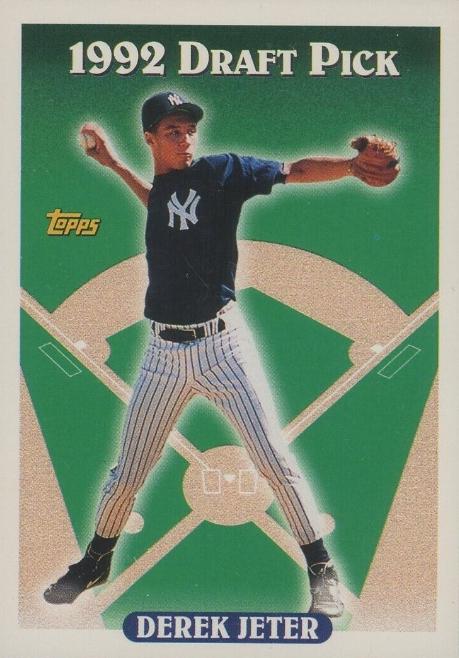
Not every set carries the same weight. Some are iconic, like 1993 SP, home to the Derek Jeter rookie that clears $900 even in a PSA 9. Others are annual mainstays that reliably produce, like Topps Chrome, Bowman Chrome, and Panini Prizm. Those are the sets that introduce the key rookies and the parallels collectors hunt. At the top end, products like Flawless and National Treasures put a patch or an autograph on nearly every card, and that is a different game for a different buyer.
Timing moves everything else. Rookie cards spike when a player debuts or breaks out. Veteran cards tend to climb around the playoffs, especially when a team makes a deep run. An offseason injury can sink a price overnight. A blockbuster trade can send one soaring. You have to watch the games, the news, and the mood of the market.
What To Actually Do
Here is the play if you want a collection that holds value.
Start with the player. Do not get distracted by a flashy parallel of someone nobody will remember. Build around talent you believe in, whether that is a proven veteran or a prospect with a real ceiling.
Respect scarcity. A base card of a great player is a fine start. If you want growth, a low-numbered parallel or a true short print is where the upside lives.
Treat condition as the deciding factor. For higher-value cards, buy the best grade you can afford, and inspect raw cards closely before you ever pay to grade them. The multiplier between a 9 and a 10 is the whole reason grading exists.
Do not chase every hot card. Every week brings a new must-have. Most of them fade. The Acuna market is a good reality check: a 2018 Topps Chrome Ronald Acuna Jr. rookie sits around $15 raw and roughly $44 in a PSA 10. Plenty of cards that felt urgent at the peak settled into modest, sensible prices. Patience beats hype.
Start small and learn. You do not need to drop a grand to understand the market. Pick up a base prospect like that Walcott near $7, or a mid-grade rookie under $50, and watch how it moves over a season. That is how you learn pricing without risking your paycheck.
The hobby rewards the patient. The fundamentals never change, and if you anchor to them, you will stay ahead of the flippers chasing the next big thing.