

The card market is not one trend right now. It is two. The scarce, established stuff keeps grinding higher while the mass-produced modern base that flooded out of retail is getting a reality check. Pull up real sold comps and the split is obvious.
A 1952 Topps Mickey Mantle #311 trades around $46,960 raw. That is one card. On the other end, a base Shai Gilgeous-Alexander Prizm parallel sits near $44 in a PSA 10, and SGA is an MVP-level name. Same hobby, two different worlds.
The market split is real
High-grade vintage and low-numbered modern premium are doing what they almost always do. They hold. Scarcity is baked in, the buyer pool knows exactly what these cards are, and there is no flood of new supply to dilute them. The Mantle is the cleanest example. Pre-war and 1950s Topps grails barely flinch when the broader market pulls back because almost none survive in top grade.
The other side is softer. Raw modern base singles are everywhere. Print runs are enormous, retail blasters are stacked on shelves, and collectors have stopped paying up for a flashy design with no real scarcity behind it. A base Anthony Edwards Prizm Silver lands around $44.97 in a PSA 10. Edwards is a franchise player and a genuine star. That number tells you how much supply weighs on base cardboard right now.
Premium parallels still command a premium
Look at what a serial number does. The base Jayden Daniels 2024 Prizm rookie runs about $68 in a PSA 10. Step up to the Silver parallel of that same card and you are at roughly $872.50 in a 10, with the raw copy near $128.50. Identical player, identical year, identical design. The only difference is the parallel, and the market prices that scarcity at better than ten times the base.
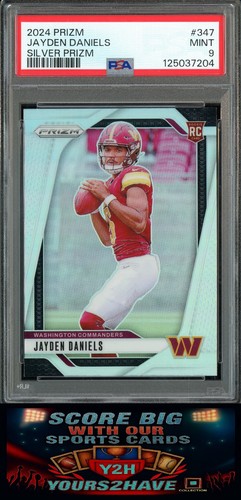
That gap explains why the high end keeps holding up. Buyers are not paying for the player alone. They are paying for the version of the card that is actually hard to get.
Women's basketball keeps climbing
Caitlin Clark is the strongest engine in the hobby this cycle. Her 2024 Prizm WNBA base rookie sits near $290 in a PSA 10 with thousands of sales behind it. The Ice parallel of that card pushes to about $393.92 in a 10, with the raw copy around $68.99. The volume on her cards is enormous, which is exactly what you want to see. It means the demand is broad and durable, not one or two whale buyers propping up a thin market.
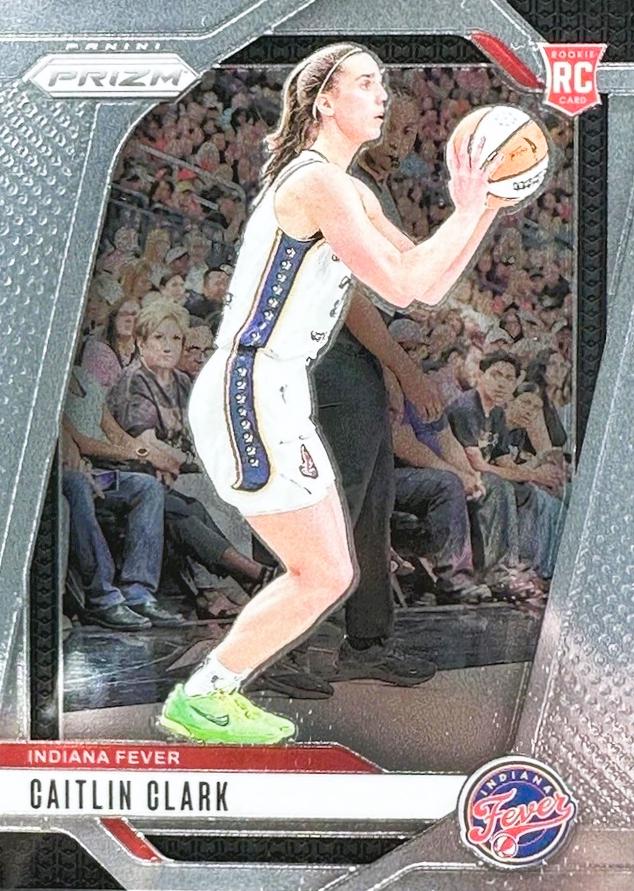
Women's sports cards are not a niche corner anymore. The graded-rookie demand around Clark is the proof, and the buyer base is still growing.
Rookies: where the action lives
Football rookie quarterbacks still drive volume. The Jayden Daniels Prizm base moves thousands of copies, and the premium parallels do the heavy lifting on price. In basketball, the next wave is led by Cooper Flagg. His 2024 Bowman Chrome University card already trades around $72.96 in a PSA 10, and that is before he plays a single pro game.
Here is the pattern worth internalizing. The base prospect card stays cheap and liquid. A Cam Ward Bowman Chrome U base sits near $35.93 in a PSA 10. His Prospect Autograph is closer to $159.88. The autograph and the low-numbered parallels are where the upside concentrates if the player hits. The base is your liquid lottery ticket. The auto is your conviction bet.
Where the affordable plays hide
You do not need five figures to find something interesting. A 1997 Grand Slam Ventures Tiger Woods rookie trades around $67.50 raw and about $235.50 in a PSA 9. That is an iconic athlete's rookie-era card at a price most collectors can actually reach. Cards like that are where patient buyers do well, because the name carries weight long after the hype cycles move on.
What to do right now
Be selective. This is not a rising tide lifting every card. Quality over quantity is the move. For vintage, anything iconic in high grade is a rock-solid hold. For modern, lean toward low-numbered parallels and authenticated autographs over base singles, because that is where the scarcity actually lives. Check the pop report, line your purchase up against recent sold comps on eBay, and do not pay up just because a slab says 10. Know why it grades 10 and roughly how many other 10s exist. Buy the scarcity, not the design.