
The card market is loud right now, and the noise makes it easy to buy wrong. Fanatics taking the MLB, NFL, and NBA trading card licenses is the real story of 2026. Panini Prizm and Donruss are being retired for those three leagues, which turns every card already printed under them into a closed set. That changes what collectors chase. It does not change the rule that has always run this hobby. Scarcity and proven names hold. Hype and oversupply fade. The comps tell you which side of that line a card sits on, so start there.
What's Running Hot, and What's Actually Scarce
The low end is flooded. Modern base rookies print in enormous numbers, and the secondary market shows it. A 2020 Panini Select Randy Arozarena base runs about $2 raw and barely $7 in a PSA 10. That is not a knock on the player. It is what supply does to a common card. Boxes of random modern singles move for a couple hundred dollars because the floor under undifferentiated cardboard keeps dropping.
Now look at the other end. A 1952 Topps Jackie Robinson trades around $4,240 raw, and a PSA 9 has reached $153,533. A 1955 Topps Hank Aaron sits near $277 raw and clears $100,650 in a PSA 10. These are not speculative bets. They are fixed supply meeting permanent demand, and that combination only tightens as modern print runs get less predictable. When you decide where money goes, hold that contrast in your head.
Where Modern Money Concentrates
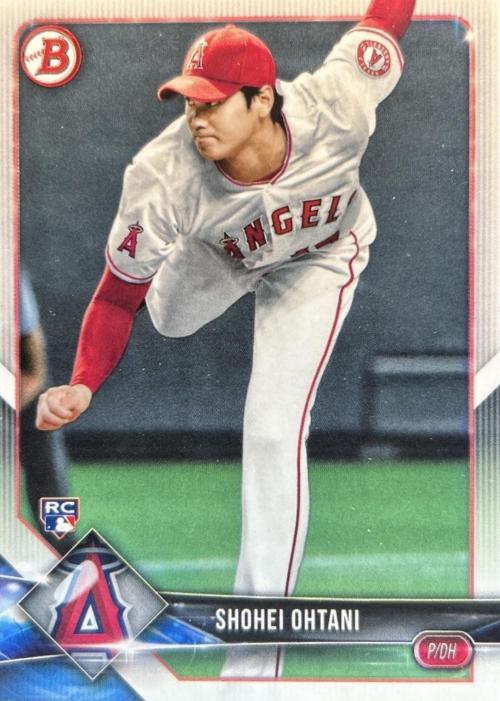
Two names carry the high end of the modern market. Shohei Ohtani is the first. His 2018 Bowman Chrome base rookie runs about $1,839 raw and $4,550 in a PSA 10, but the premium versions hold the real weight. The Refractor pushes to roughly $27,793 in a PSA 10, and his on-card Bowman Chrome rookie autograph trades around $8,035 raw and near $12,914 graded. One player, a wide ladder of prices, all of it driven by scarcity.
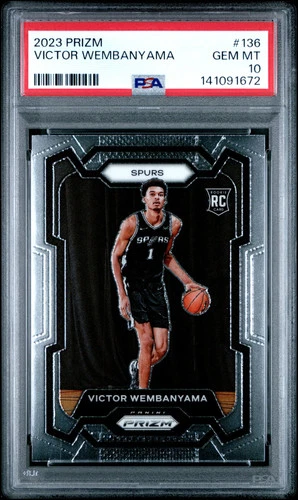
Victor Wembanyama is the other. His 2023 Topps Chrome base rookie sits around $57 raw and $587 in a PSA 10, and that card has logged more than six thousand recorded sales. His 2023 Prizm base has changed hands over twenty thousand times. That volume is the point. When a rookie trades that often, the price is tested and the market is liquid, which is exactly what you want before you commit real money to a modern name.
Playing It By Budget
Start small and the goal is liquidity, not a home run. Around $500, a graded Wembanyama base or a handful of cheap rookies of players you actually believe in keeps you in the game without betting the account. Even a soft player line has a scarce version worth grading: the Arozarena Scope parallel runs about $7 raw and $85 in a PSA 10 if you pull a clean one.
At roughly $5,000, vintage opens up. A raw 1952 Topps Jackie Robinson near $4,240 is an iconic card with a permanent floor. If you would rather own a slab, a 1959 Topps Stan Musial in a PSA 10 trades around $2,238, a Hall of Fame card with room left in it. Buy the history, not the hype.
Above $50,000, the rules tighten to rarity and provenance. A high-grade 1952 Robinson, an Ohtani rookie autograph, a premier vintage slab. At this level you are buying the cards that hold through cycles, not the ones that need a hot month to justify the price.
What to Leave Alone
The riskiest buys right now are high-print paper rookies and ungraded common lots. Grading fees and tighter standards mean it rarely pays to slab a modern common, and the market for raw commons is always soft. Submit only the cards with a real shot at a gem grade and a spread wide enough to cover the fee and the wait. Everything else stays raw or stays on the shelf.
The Fanatics shift will reshape what lands on shelves over the next year, and new product always pulls attention. Attention is not value. The cards that came through every prior cycle did it on scarcity and fundamentals, and the 2026 comps say the same thing. Anchor with proven vintage, take controlled swings on the liquid modern names, and let the sold prices, not the headlines, make the call.