
The card-license map looks nothing like it did a few years ago. The companies that print the cards changed, and that single fact ripples through every sealed box, every rookie slab, and every shelf at your local shop. If you have been heads-down ripping wax and not watching the business side, this is the part you cannot afford to miss.
Here is the short version. Topps, now under the Fanatics umbrella, holds the MLB and NBA card licenses. That is a real, locked-in shift, and it ends a long run of Panini owning the basketball flagship. The brands a lot of collectors grew up arguing about are no longer guaranteed to come back next season. That changes the math on what scarcity even means.
Why a License Change Moves Prices
The market loves a closed door. When a manufacturer loses a license, every set it printed under that license becomes a fixed historical run. Nothing new gets made. That is the cleanest form of scarcity in the hobby, and it is why the final years of any license deal tend to age well.
Look at what an established brand reclaiming its turf can do. The 2003 Topps Chrome LeBron James base rookie carries a real loose comp around $1,400, and the PSA 10 sits near $12,611. Step up to the Refractor parallel of that same card and the loose figure jumps to roughly $9,093, with the PSA 10 near $36,707. Same player, same year, same set. The parallel and the grade are doing all the heavy lifting. That is the lesson collectors keep relearning: brand pedigree plus a low-pop parallel is where the serious money lives.
The Rookies Already Worth Watching
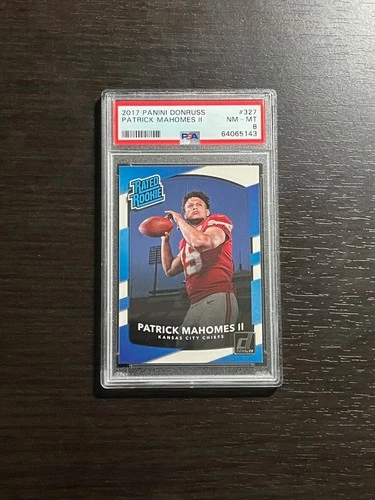
If you want to see how a quarterback's flagship rookie holds up over time, start with Patrick Mahomes. His 2017 Panini Prizm Silver rookie runs about $702 loose, and a PSA 10 of that card sits near $6,375. That is a multi-year track record on a base-set parallel, and it shows what a sustained career does to a rookie slab.
The newer names tell a more patient story. Joe Burrow's 2020 Prizm base rookie is affordable at roughly $15 loose, its PSA 10 settling near $100, but the parallels carry the weight. Justin Herbert's 2020 Prizm Silver rookie already commands about $108 loose and pushes past $1,081 in a PSA 10. C.J. Stroud's 2023 Prizm Silver sits near $62 loose, the PSA 10 landing around $325. The pattern is consistent. The base card is the floor. The colored parallel in a clean grade is the real chase.
Baseball and Basketball Anchors
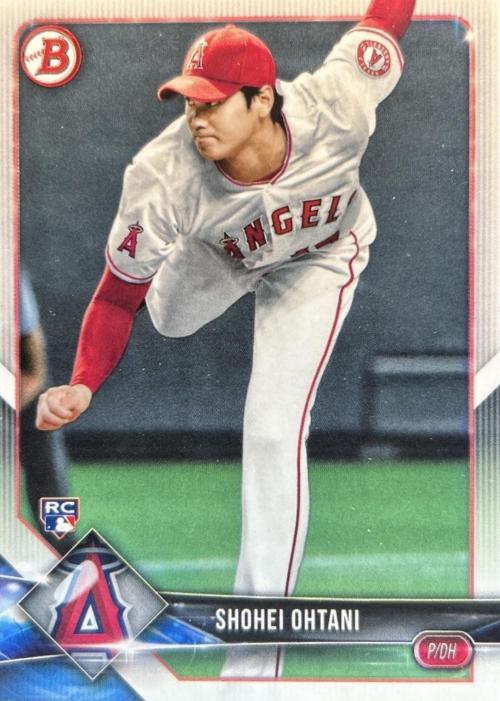
Baseball has its own gravity, and Shohei Ohtani is the center of it. His 2018 Topps base rookie carries a loose comp near $125 and a PSA 10 around $705. Aaron Judge from the same draft class holds up too. His 2017 Topps Chrome rookie runs about $202 loose, a PSA 10 near $450. These are not speculative flyers. They are established stars with deep sales histories, and that depth is exactly what makes them safer holds when the broader market gets choppy.
Basketball gives you the full range. Zion Williamson's 2019 Prizm Silver rookie sits near $31 loose, gem copies around $200, a reminder that even a hyped number-one pick lands at the value-tier when the parallel is common and the career is still being written. At the other end, a true blue-chip like Stephen Curry shows what time does. His 2009 Topps Chrome base rookie carries a loose comp near $2,835 and a PSA 10 around $31,681. Fifteen years of production and a couple of titles will do that to a card.
What To Actually Do With Your Sealed Wax
If you are sitting on sealed product from the final years of a soon-to-expire license, do not dump it cheap. The last print runs under any deal become finite the day the license moves. That does not guarantee a windfall, and plenty of late-license boxes are forgettable. But the genuinely scarce, high-end sealed product from a closing era tends to hold a premium that fresh product cannot replicate. Scarcity is the one lever a new manufacturer cannot pull on day one.
The smart play is the same as it always was. Know the player, know the parallel, and know the grade before you buy. Pull real sold comps instead of trusting a hot take. A pristine, low-pop PSA 10 of a major star's flagship rookie has earned its premium across cycles, and a new license map does not change that fundamental truth. It just rearranges which brands get to print the next generation of them.
The hobby is not slowing down. The names on the boxes are changing, the scarcity story is getting sharper, and the cards with real sales depth keep proving they belong. Watch the comps, hold the right slabs, and let the license shuffle do the rest.