
The card market is not one thing right now. It is hot in pockets and dead in others. Most of it just sits. The stimulus-era flippers who bought every box of Prizm and Optic are gone. What is left is a pickier buyer, and that buyer pays up for two things only: scarcity and legacy. Everything else is soft.
Start with the old money. A 1957 Topps Frank Robinson rookie carries a loose value around $152. Grade one clean and a PSA 10 runs into the tens of thousands. You do not buy that card to flip it. You buy it because it has held its floor through every cycle since the hobby learned what vintage Hall of Fame rookies are worth. Condition-sensitive vintage is the anchor. It has not budged.
The 90s Inserts Are Doing the Real Work
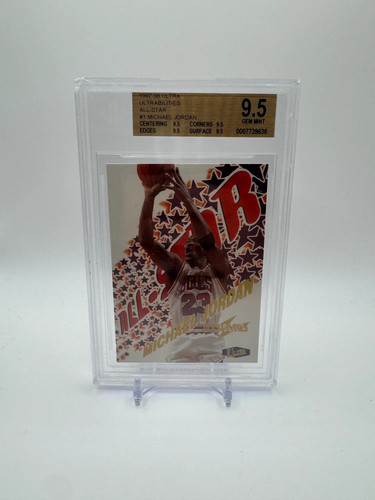
This segment moves fastest. The 1997 Fleer Soaring Stars Michael Jordan sits near $130 raw, and a clean gem of it clears $1,278. Want the cheaper entry point? A 1996 Ultra Jordan base runs about $15 loose, yet the same card slabbed at the top grade pushes past $725. These were tough pulls when they printed. They carry iconic design. They were never blanketed across the market the way early-2020s parallels were.
The people who collected in the 90s have disposable income now. They want the cards they could not afford as kids. That is real demand backed by real scarcity, not hype. Focus on the names that anchor the era. Jordan. Kobe. Shaq. Iverson. Skip the commons and chase the iconic sets.
Grades, Pops, and Why the Card Still Matters
Grading inflation is real for cards that got slabbed in bulk during the boom. A gem-grade base Topps Chrome rookie does not carry the weight it once did. Thousands exist. But a genuinely tough card in a high grade still commands a premium, and the gap between raw and graded proves it every time.
Take the 2025 Topps Chrome Logofractor Shohei Ohtani. Raw, it runs about $69. Slabbed at the top grade, it jumps to roughly $415. That spread is the market telling you both the grade and the scarcity matter on this specific card. The number is not just the plastic. It is the plastic on a card that is genuinely hard to find clean.
Prospects: Scarcity Decides Everything
Plenty of buyers still chase prospects. The early thrill is real. But print run decides whether you get paid. A 2025 Topps Now Cam Schlittler sits around $16 raw, and a gem copy lands near $105. He got the call to the Bronx, and pinstripes always drive demand. Topps Now runs are not small, though. If he does not pan out, those cards drop.
Now compare a numbered auto. The 2025 Bowman Draft Chrome Prospect Autograph for Seth Hernandez runs about $250 raw, and a gem copy lands near $635. Low-numbered Bowman Draft autos bake the scarcity and the demand in from day one. A 2021 Bowman Draft Chrome Bubba Chandler auto sits near $180 raw, with the top grade around $364. That is where prospect money actually holds. Not in the hundredth Topps Now of a fringe call-up.
What Climbs and What Bleeds From Here
The 90s insert market keeps getting tighter. Own the key names? Hold them. If you are buying, buy the stars and the iconic designs, and pass on the rest. Vintage is the safe harbor. A low-grade Hall of Fame rookie under $50 still surfaces if you dig, and it will outlast every flavor of the week.
What bleeds is obvious. Generic modern base parallels for non-superstar rookies sit everywhere, and flooded supply kills value. Sealed product for anything that is not a true limited release or genuine vintage is a rip, not an investment. The days of buying any wax and doubling your money are over.
Get specific. Watch what is actually selling. Weigh rarity against condition, and back players with established legacies or genuine elite-prospect scarcity. The market rewards discipline right now. So reward yourself by having some.